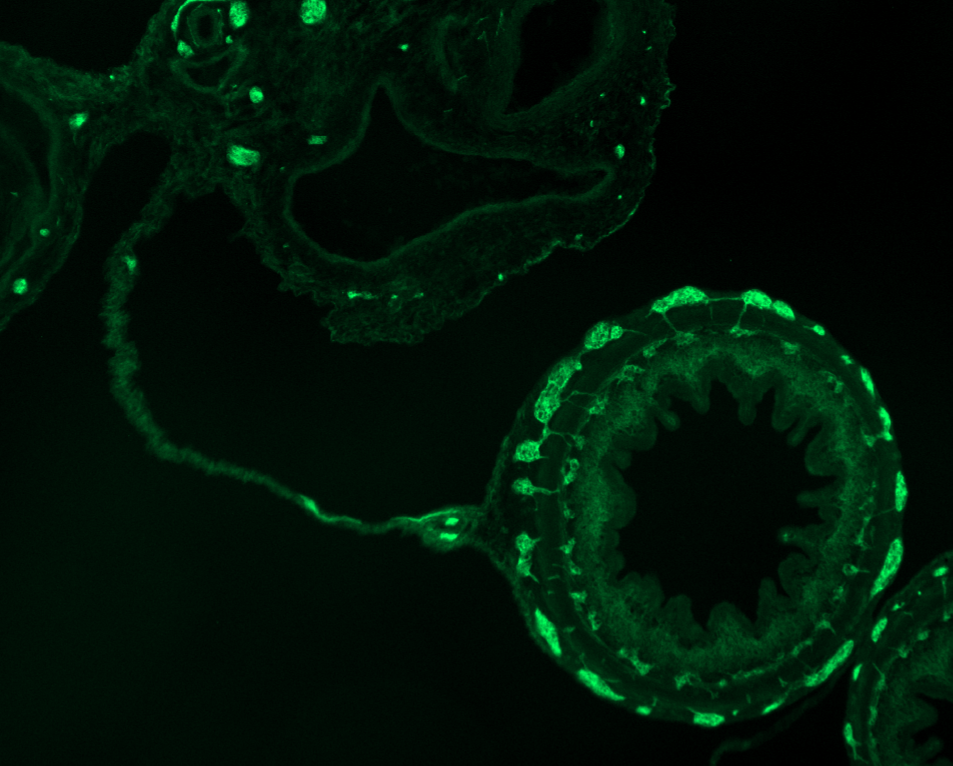
Gut Section of late stage avian embryo stained for N-cadherin
- highlighting the Enteric Nervous System plexi in the gut wall
The ENS (Enteric Nervous System) is the part of the autonomic nervous system that innervates the whole digestive tube. Although it is connected to and communicates with the central nervous system, it is actually independant from it. In embryonic development, the ENS is derived from the migration of a population of cells called the vagal neural crest cells - these cells delaminate from the neural tube (future spine/central nervous system) and migrate to the anterior part of the digestive tract (oesophagus) before slowly making their way to the end of the tract while forming the two plexi that constitute the enteric nervous system. This migration is sometimes disrupted if not completely stopped in some congenital diseases, such as Hirschsprung's disease, rendering the digestive tract incapable of moving food along and causing life-threatening intestinal blocage.
While studying early human development past very initial stages of embryogenesis is not possible for ethical reasons, the recent developement of stem cell technologies and directed differentiation has permitted the production of 'Human Intestinal Organoids'
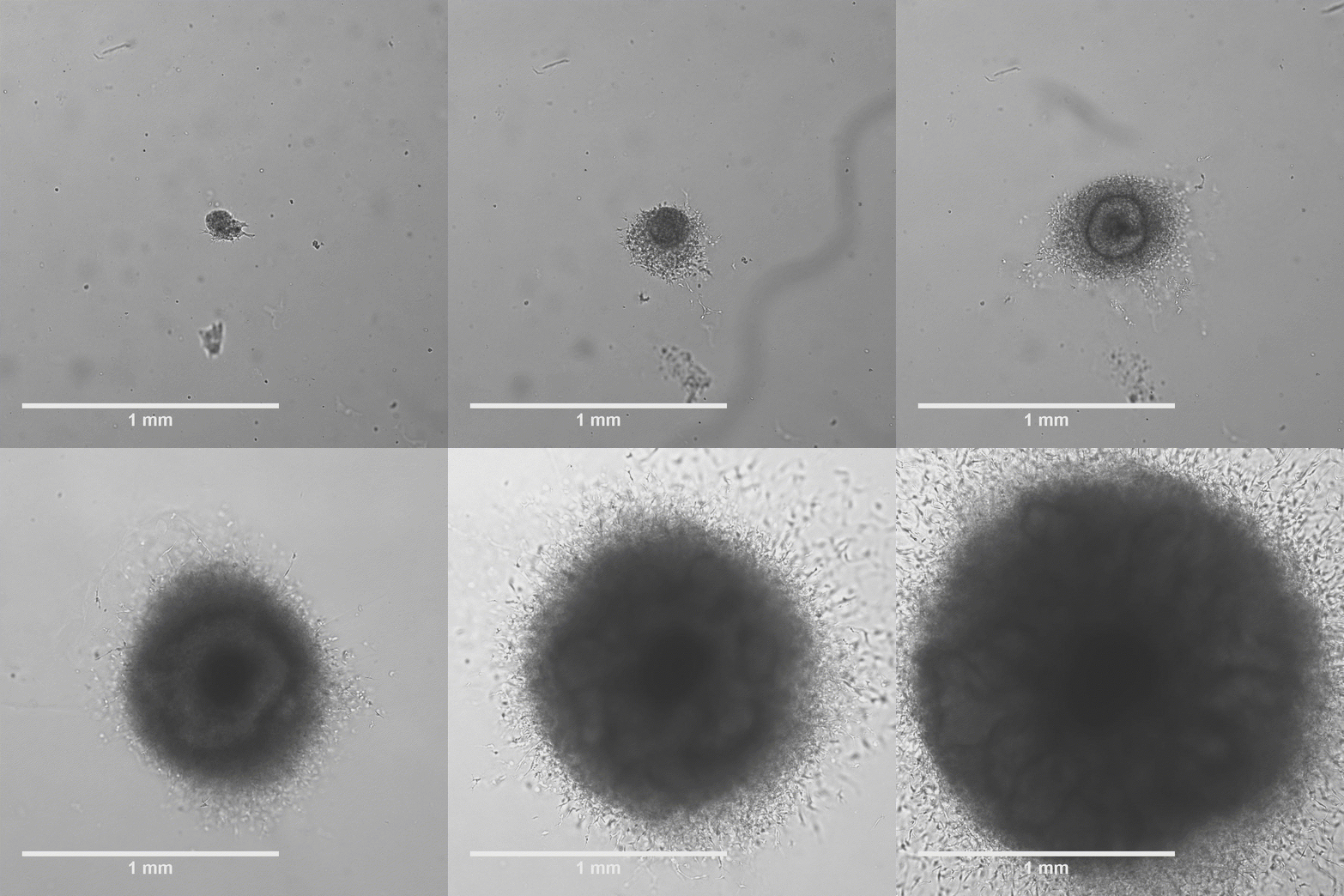
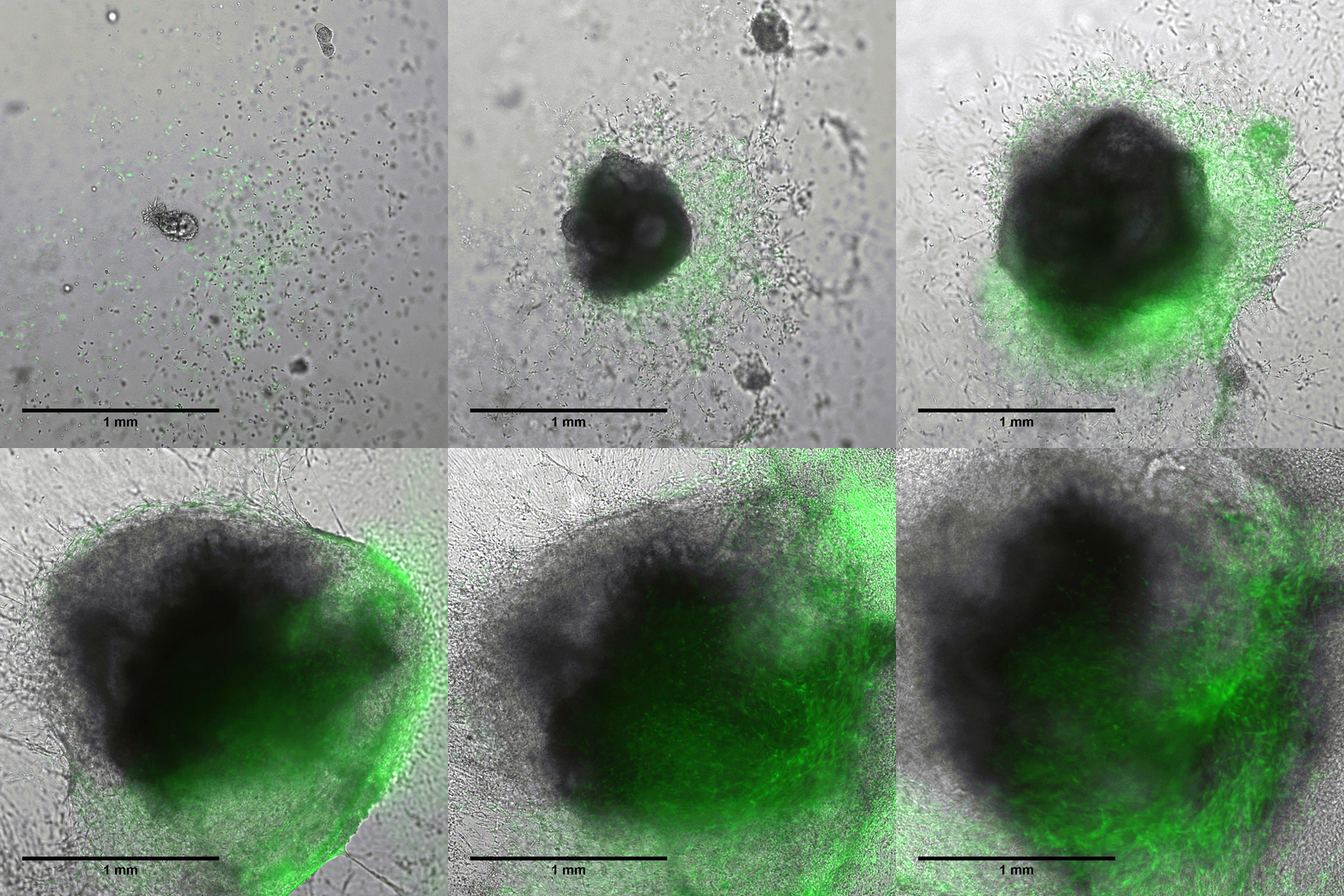
With this system, we are able to compare early development of human small intestine with and without an enteric nervous system (1) and discern some of the interactions between the developping ENS around it's neighboring tissues (the gut's mesenchyme).