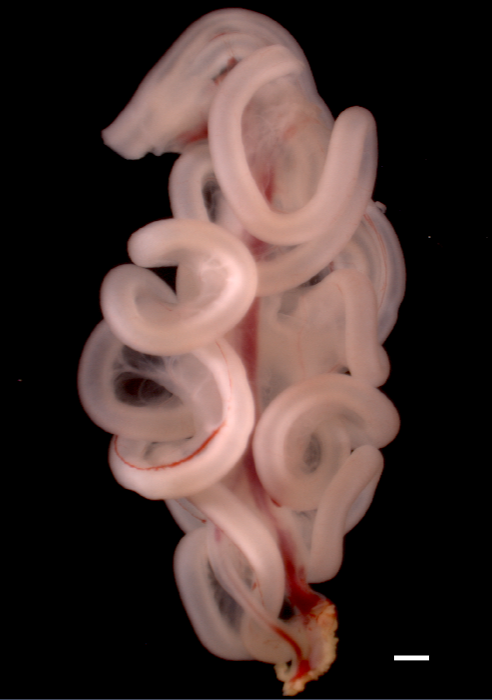
Duck embryonic small intestine at day 18 (out of 28) of development
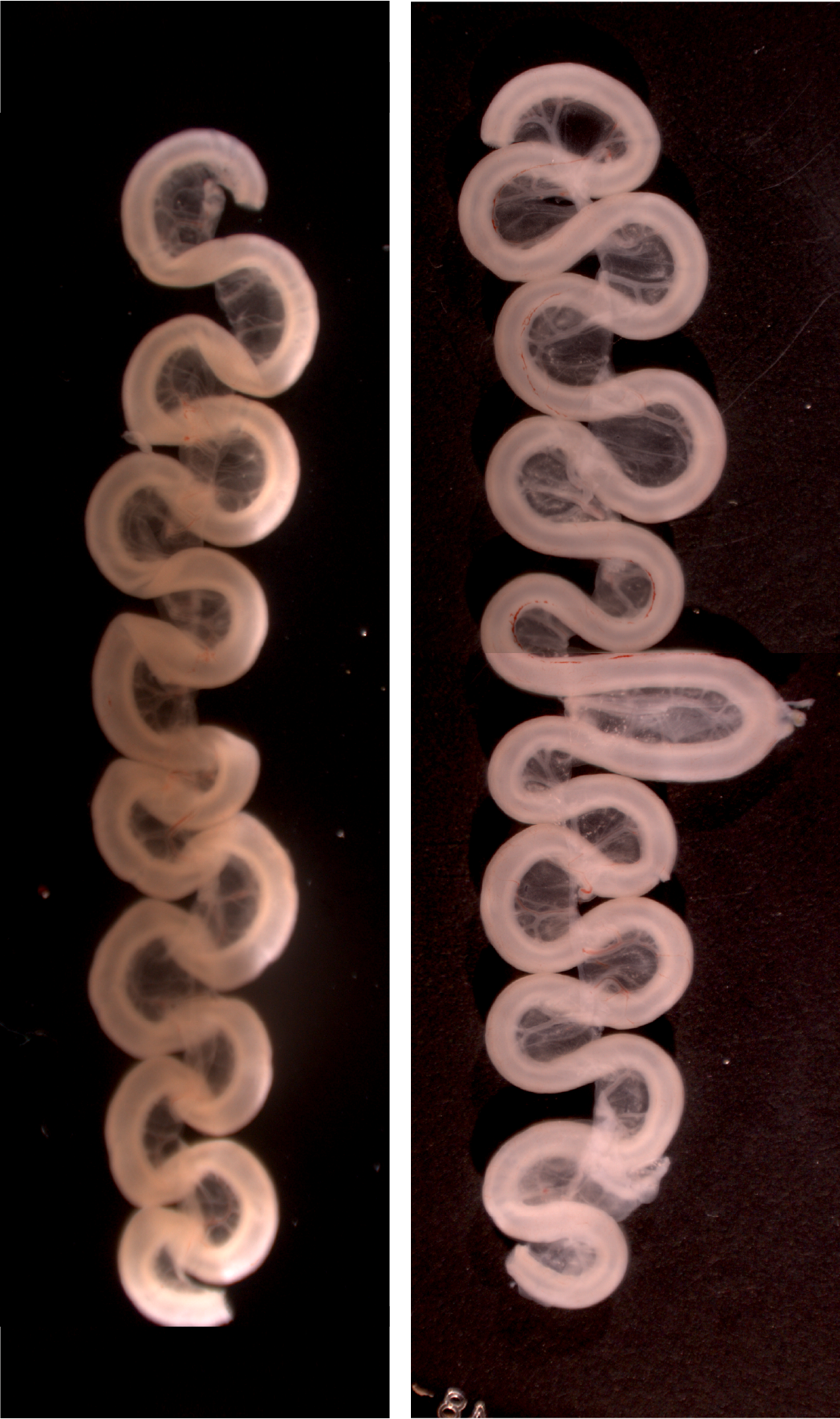
Looping highlighted by removing the superior mesenteric artery in
chicken and duck embryonic gut tubes
Gut looping is the process by which the small intestine loops onto itself in order to fit in the abdominal cavity while being long enough to meet nutritional needs.
Intestinal loops arise due to mechanical buckling of the gut tube as it elongates against the constraint of a thin, elastic membranous tissue, the dorsal mesentery. Previous work by Savin et al. (1) showed that the mechanical and geometrical properties of the mesentery and gut tube, as well as their respective growth dynamics determine the morphology of looping.
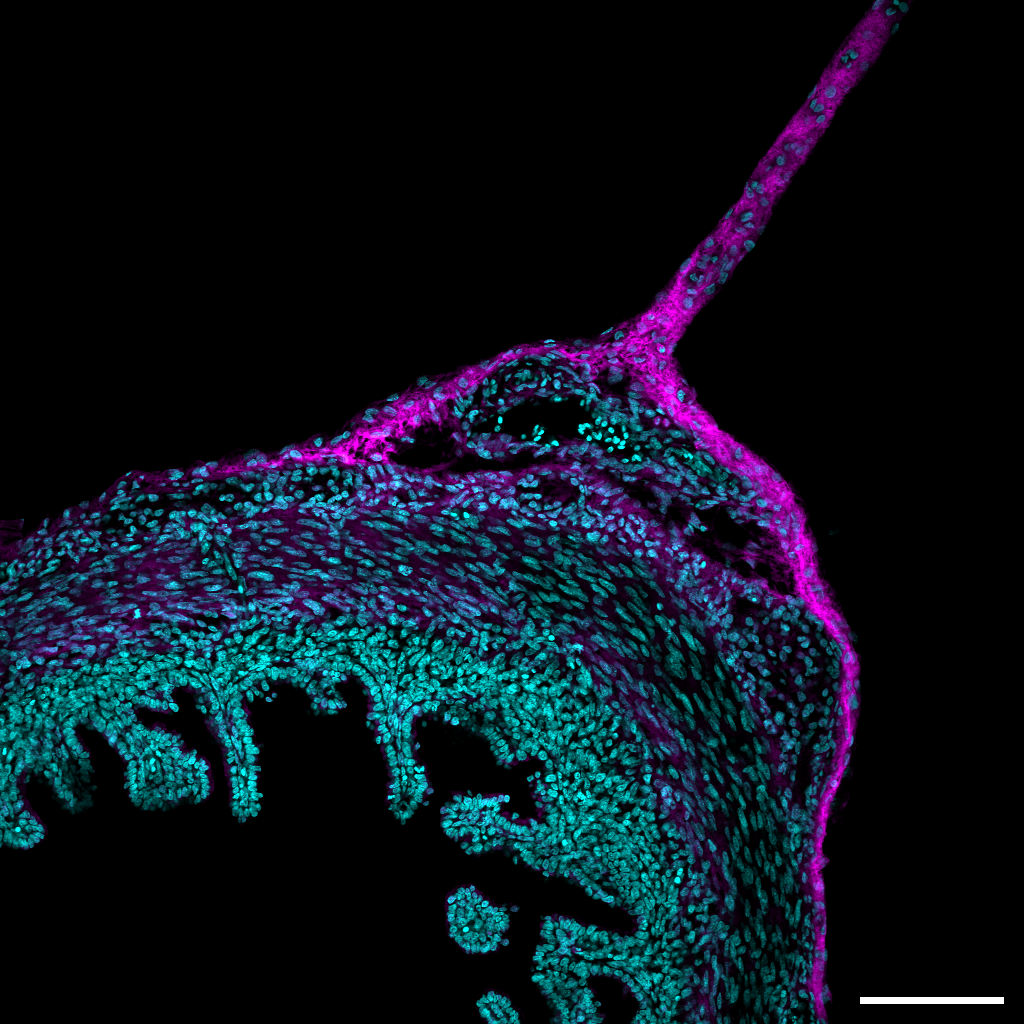
My postdoctoral work has focused on understanding what biological effectors drive the looping process. I am now also looking into how modifications of growth dynamics and mechanics in the embryo of different species result in variation of looping in evolution - using gut looping morphogenesis as a model of developmental mechanics as a driver of the evolution of form (2).